


09 December 2025 The Paul-Émile Borduas Catalogue Raisonné Unveils a New Version.
The Paul-Émile Borduas Catalogue Raisonné Unveils a New Version.
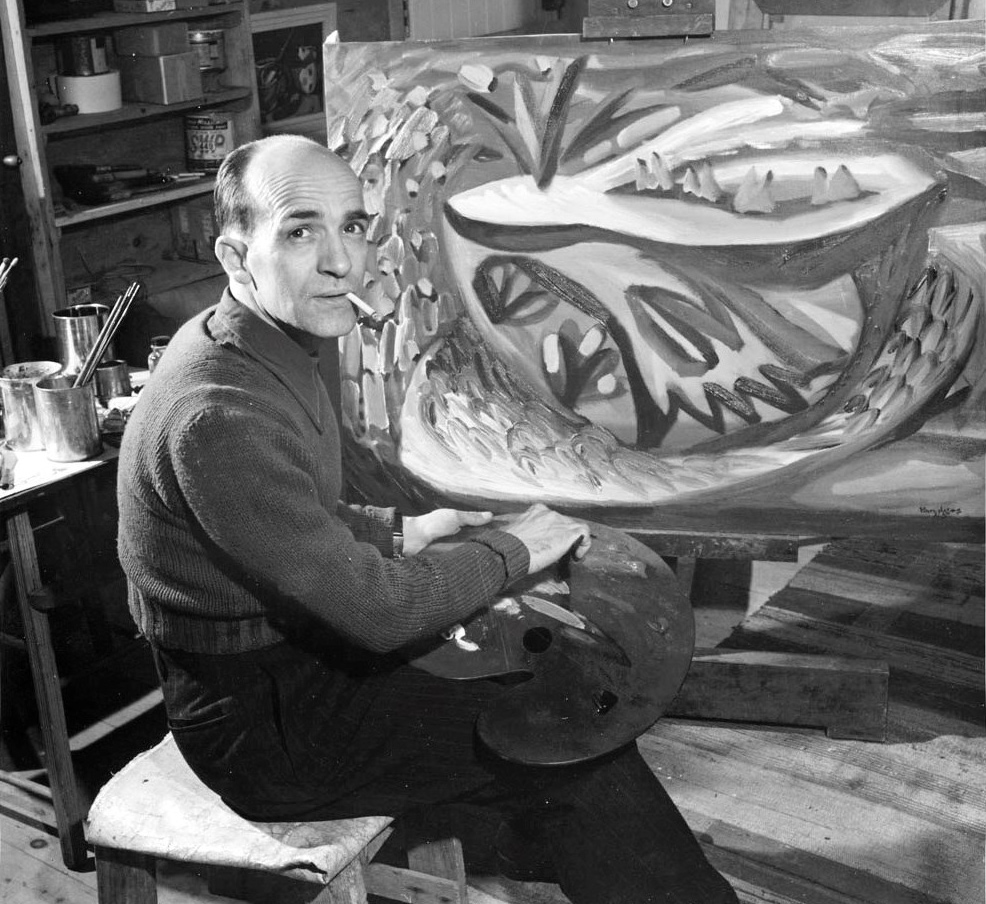
Paul-Émile Borduas, Bibliothèque et Archives Canada/MIKAN, 1946
Photo : Ronny Jaques
The CIAC is pleased to have René St-Pierre as a partner in the development of the “Le Pavillon des arts” project in Cité-du-Havre.
Supported by the Gail and Stephen A. Jarislowsky Institute of Canadian Art at Concordia University, the new version of the Paul-Émile Borduas Catalogue Raisonné brings together decades of research on the artist — his works, exhibitions, publications, critical reception (bibliography), and archival traces — within a public, bilingual database.
Conceived by professor François-Marc Gagnon (1935–2019), the Borduas Catalogue Raisonné aims to give the artist’s painted work the same visibility and long-term scholarly attention that his writings — most notably Refus global — have received in Canadian cultural history. Under his direction, the team sought to identify all known works — drawings, watercolours, gouaches, photographs, oil paintings, and sculptures — verify their metadata, and document their publication and exhibition histories. This initiative is a major project of the Jarislowsky Institute, now carried out in partnership with archivist René St-Pierre, and Brendan Reed.
A Brief History…
The project began in the early 2000s as a series of FileMaker research files, before being migrated in 2012 to a web interface developed at Concordia. That same year, René St-Pierre — creator of the Archiv’Art platform originating from the Armand Vaillancourt Catalogue Raisonné — received an Institute Fellowship to explore, with Professor Gagnon, ways of enriching the Borduas database. At the time, the catalogue did not yet connect the “works,” “exhibitions,” and “bibliography” entities.
In 2017, as part of a master’s degree in art history at UQAM, St-Pierre developed a proof of concept linking these entities and adding a “documents and archives” section. He publicly presented the prototype alongside Gagnon and Gilles Lapointe during one of the Institute’s Afternoon at the Institute events, and later served as Gagnon’s research assistant until 2019. Before his passing, Gagnon entrusted Gilles Lapointe, assisted by René St-Pierre, with the responsibility of continuing the catalogue raisonné and deepening the study of Borduas’s work.
In 2023, Lapointe passed the torch to St-Pierre, who established the Borduas Committee to evaluate requests for inclusion in the catalogue and advance ongoing research. Its expertise draws on the collaboration of professionals such as Paul Maréchal, author of several catalogues raisonnés devoted to Andy Warhol, and Richard Gagnier, former Chief Conservator at the Montreal Museum of Fine Arts.
In 2025, the project enters a new phase: migration to a cloud-based, modular, and interoperable database aligned with museum and archival standards. While the research corpus is now stable yet evolving, the focus shifts toward data enrichment and the development of discovery tools — ensuring that Borduas’s work remains accessible, rigorous, and enduring for generations to come.
Looking Ahead
The next step is to expand the research and develop new information and visualization tools that will enhance the value of this resource for scholars, institutions, and enthusiasts alike. This work aims to directly link exhibition records, bibliographic references, and archival documents to each artwork, revealing the networks that shaped Borduas’s career. Connecting exhibitions to works will make it possible to trace the circulation of paintings over the decades, follow critical echoes, and understand how his artistic influence extended beyond Quebec and Canada.
Thoughts are underway regarding how research on Borduas’s oeuvre may further develop within academic settings, including possible research residencies or graduate scholarships for MA and PhD students at Concordia and UQAM in art history, art practices, and sociology of art. As administrator of the Répertoire numérique sur les Automatistes (Centre de Recherche Interuniversitaire sur la Littérature et la Culture au Québec CRILCQ), René St-Pierre is also positioned to build bridges with researchers Gilles Lapointe and Sophie Dubois, expanding the scope of research to include the fifteen other signatories of the Refus global manifesto. Parallel to this project, scholars also have access to the Borduas archival fonds held at the Musée d’art contemporain de Montréal, as well as Mapping the Automatist web page, developed by the CIAC. A recent initiative has also emerged in Quebec City: the Audain Chair, which aims to preserve the legacy of the Automatistes and strengthen their place within Quebec, Canadian, and international art history.
Borduas stands as a foundational and emblematic figure of Canadian modernism and Quebec’s intellectual history. By maintaining the catalogue raisonné as an open, bilingual, and rigorously sourced resource, this project preserves a national research asset while making it truly usable beyond the museum and archival spheres.
For more information about the Paul-Émile Borduas Catalogue Raisonné, please contact René St-Pierre at: info@archivart.ca
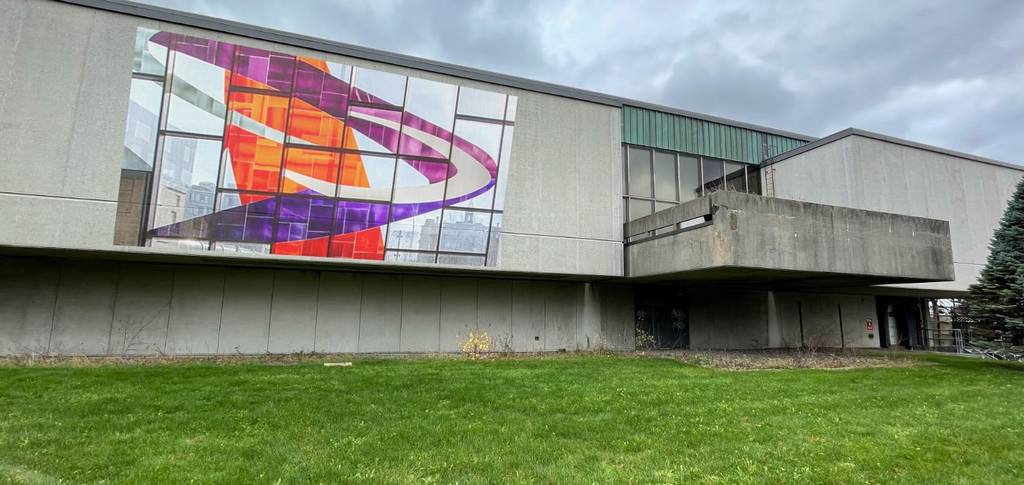
The Expo 67 Art Museum: An exceptional building to be repurposed for the visual arts.