


ANDY WARHOL’S WALLPAPERS
“The wrong thing in the right space”: Andy Warhol, Pioneer of Wallpaper as an Independent Art Form. Patterns, themes, relationships (1966‑1983)
by Teresa Lucia Cicciarella, Ph.D.
Translated from Italian using DeepL with corrections from the author.
To read the original text in Italian, click here.
Wallpaper is now recognized as one of the possible media of contemporary art. Few international publications and exhibitions have been dedicated to this form of expression [1], but the authors of the related essays agree that its “first conceptual use […] can be traced to 1966 when Andy Warhol created his now famous Cow wallpaper [… that] embraced all the previously belittled repetitive and familiar characteristics of wallpaper while transforming the background for art’s display into the work itself” (De Salvo, Massie, 1997, pp. 10‑11).
In the 1960s, in fact, with the work and disruptive pop poetics of Andy Warhol (b. Andrew Warhola, Pittsburgh, USA, 1928 – New York 1987), this self-contained medium of expression made its debut, pushed beyond its most pertinent domestic use to be admitted into the realm of the visual arts, sweeping away—in the wake of what was outlined by the historical avant-gardes—the residual dichotomies between “major arts” and “minor arts”.
Until the linguistic upheaval brought about by the avant-gardes of the early 20th century, all forms of popular art associated with decorative styles, craftsmanship, and an affinity for popular taste had been relegated to the second category; specifically, wallpaper was still classified as minor art in the post-World War II period, even though some prestigious companies had enlisted artists to create individual patterns [2].
It is worth noting that as late as 1967, in the wake of Warhol’s revolutionary gesture with the presentation of Cow Wallpaper at the Leo Castelli Gallery in New York (Fig. 1) [3], wallpaper was still considered, in the United States, “the most minor of any of the minor arts” (Alvard, 1963), the most insignificant of the minor arts, with particular reference to patterns derived from painting.
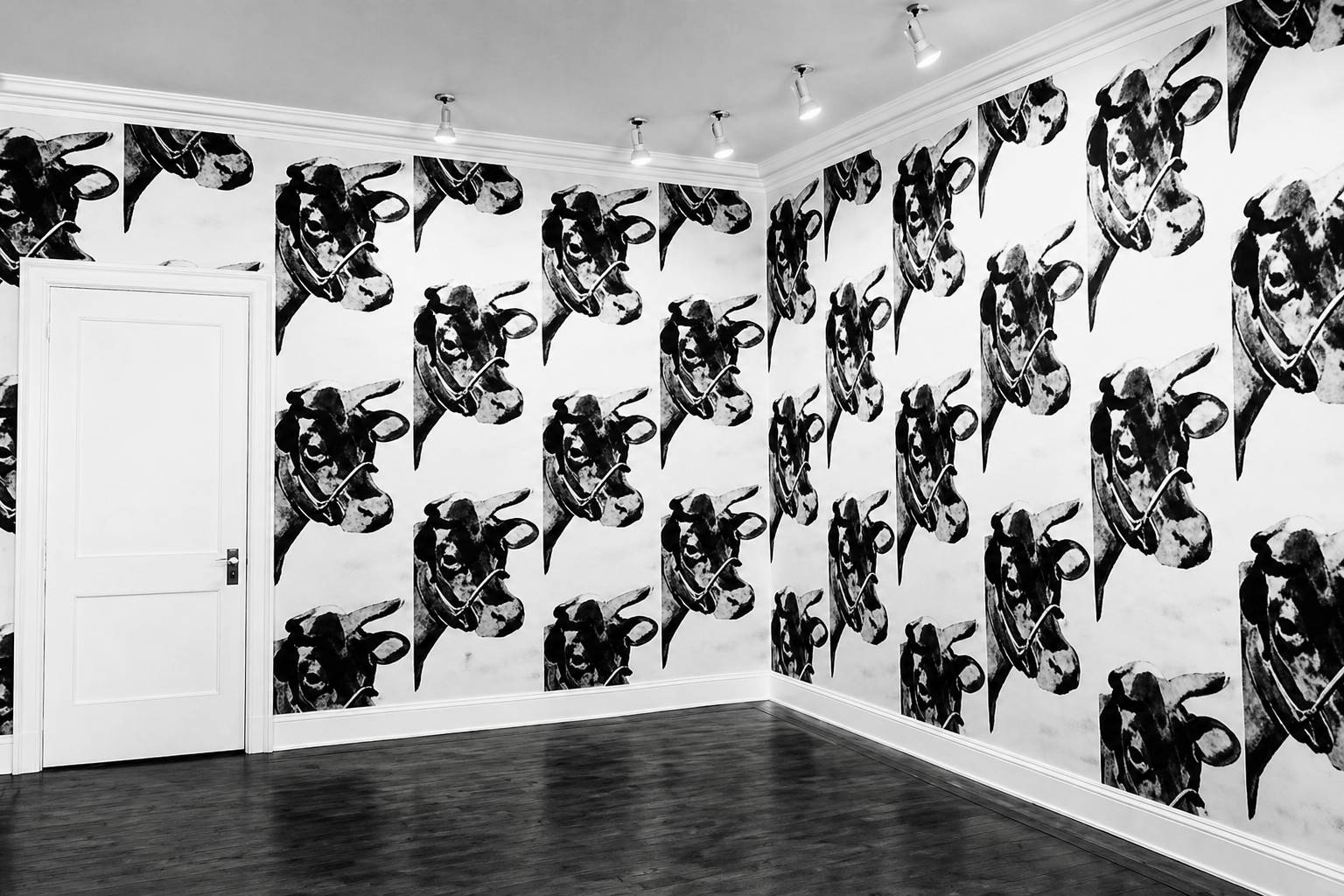
Fig. 1 Andy Warhol, Cow Wallpaper, 1966. View of the installation at the Leo Castelli Gallery, New York, April 1966. © Andy Warhol Foundation for the Visual Arts
It is probably no coincidence, therefore, as can already be observed, that the first instances of wallpaper as autonomous works of art emerged within the pop art milieu and, even more notably, under the hand of Warhol, a pioneer of the tendency that sought to hybridize—to the point of converging within the broad margins of the artwork—a high canon and a low canon of language and aesthetics [4]. Values that, not infrequently and with Warhol at the forefront, were bent to the ironic mechanism of repetition and reduced to the dimension of the “surface”: aspects that lend themselves well to the gradual shift toward the medium of wallpaper, taken out of its inherent decorative context to become a subversive aesthetic element.
The process of iconographic reiteration that governs the pattern of the wallpaper leads to a particular type of expressive structure: it does not, in fact, imply hierarchies, teleological developments in the arrangement of the image (since there is no organizing purpose), nor narrative sequences useful for defining a scene.
The repetition of signs or icons does not allow one element to emerge over another, but rather makes each sign “necessary” to the existence of the next one (Deleuze, 1968, p. 30), in a sort of democratic chain of images that unfolds similarly to what Rosalind Krauss defines as the “grid” (Krauss, 1979) as a key structure of modern art and according to a mechanism that, for Gilles Deleuze (1968, p. 9), pertains “to humor and irony” [5].
In particular, it is worth noting that the shift of wallpaper from the decorative to the expressive realm was a gradual process, and that it is possible to identify its key turning points. Indeed, this cannot be viewed as a change abruptly proposed by Warhol in the 1960s, akin to a provocation, but rather as the outcome of a movement that cultivated the roots of artistic trends already present between the second half of the 19th century and the early 20th century and which, in Pop art’s poetics and the artist’s modus operandi, found fertile ground for the development and exploration of various factors [6].
Warhol, for his part, created five different wallpaper patterns between 1966 and 1983. The first is, as mentioned, Cow Wallpaper, conceived in 1966 and reworked, up until 1976, into four different colour variations.
It is a macro-pattern centred on the reproduction of an image of a Jersey cow taken from an agricultural magazine, whose iconographic motif is characterized by a vertical pattern (reminiscent of the layout of a film reel), by the arbitrary breaks at the edges of the roll, and by the use of artificial colours—incongruous with the subject and, in this sense, employed as a device to distance the representation from its real referent.
The wallpaper presented at Castelli features the cow’s head in bright pink against a lemon-yellow background; a variation of this pattern—in light pink on a sky-blue background—was later presented in the spring of 1971 at the Whitney Museum of American Art [7]. Other colour combinations include one in yellow on a blue background [8] and one with a pink figure against a background tinged with violet [9].
The theme, derived from a parodic bucolic style, was not exclusive to Warhol’s work; in fact, in 1974, he created two patterns quite different from this one. The first was Mao (Fig. 2), conceived as a backdrop for a major solo exhibition at the Musée Galliera in Paris [10], entirely dedicated to the repetition of the face of Chinese communist leader Mao Zedong; the second was Washington Monument (Fig. 3), an iteration of a black-and-white sketch of the monument to George Washington in the centre of the U.S. capital.
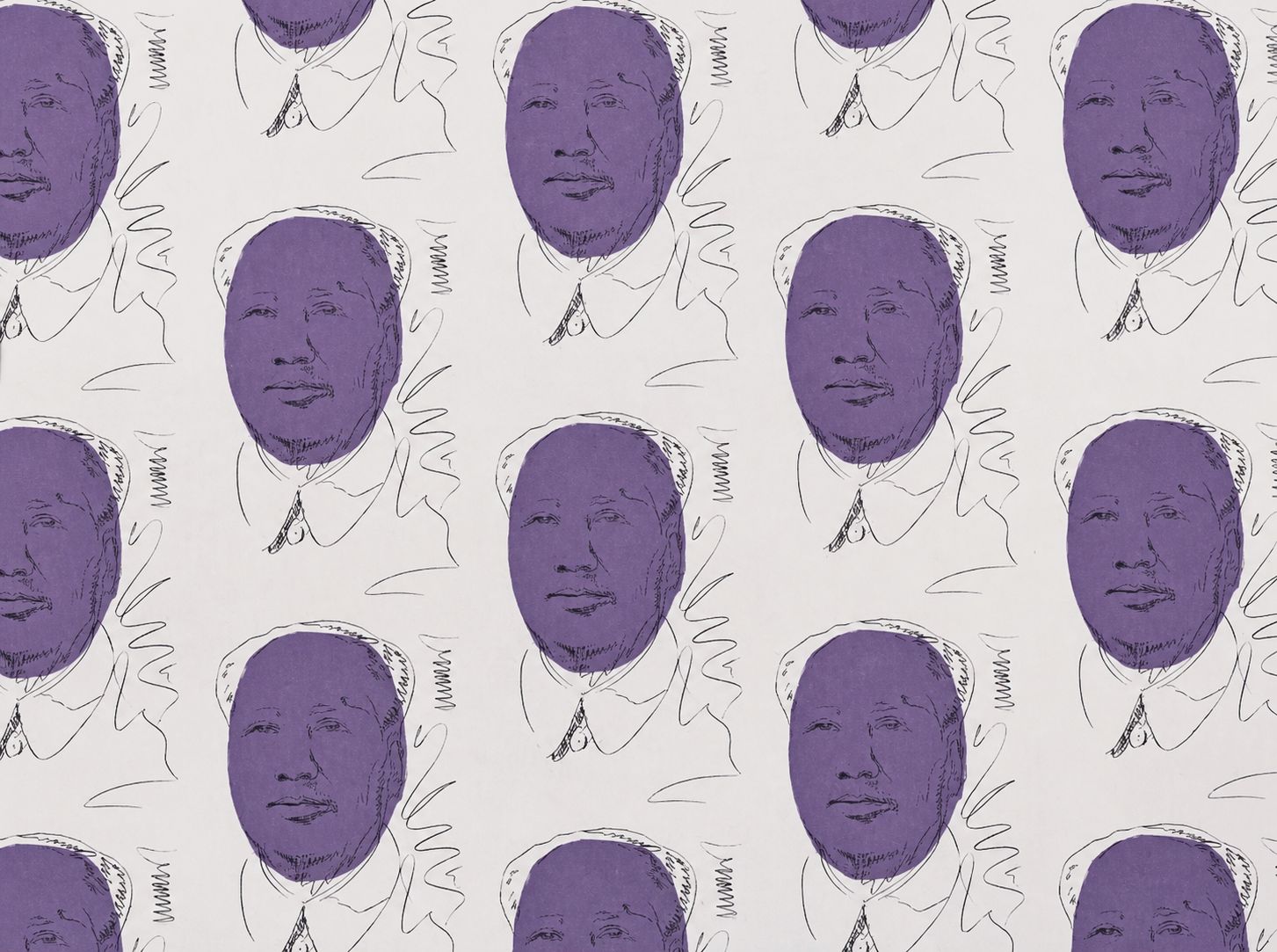
Fig. 2 Andy Warhol, Mao, 1974. © Andy Warhol Foundation for the Visual Arts
The human face hypostatized and repeated, as seen in Mao, would once again take centre stage in a new wallpaper, Self-Portrait (1978, Fig. 4) depicting the artist himself and remaining almost unique among contemporary wallpapers.
A final wallpaper is Fish, created in 1983 for the solo exhibition “Paintings for Children” (Fig. 6), held at the Galerie Bruno Bischofberger in Zurich [11].
Upon examining the proceedings of the conference The Work of Andy Warhol (New York 1988), a brief mention was finally found of a project that remained unpublished at the time of the artist’s death: a pattern that was to have centred on the skull motif, conceived as a modern vanitas and thus a recurring theme in his work beginning in 1968.

Fig. 3 Andy Warhol, Washington Monument (detail), 1978. © Andy Warhol Foundation for the Visual Arts
The wallpaper was to have been used as the backdrop for a solo exhibition titled “Andy Warhol: Skulls 1976”, scheduled to open in late 1987. In fact, the exhibition took place and consisted of the posthumous presentation – on walls simply painted white – of fifty works: silkscreen collages, paintings, and drawings featuring compositional and chromatic variations on the skull motif [12].

Fig. 4 Andy Warhol, Self-Portrait (detail), 1978. © Andy Warhol Foundation for the Visual Arts
Moreover, Warhol’s work with wallpaper—especially in instances where he intended the medium for a more conventional use as a backdrop for the installation of other artworks (as was the case with the wallpapers that followed Cow)—would demonstrate a reconnection to the trend observed since the late 1950s in favour of the environment, a clear offshoot of the historical avant-garde movements. However, whereas in the practice of the environment it is usual to observe the interaction between sculptural elements, space, and the exhibition setting, in the example offered by Warhol in 1966 a fusion emerges, combined with the extension of a concept of surface already tending, with the exhibition “Flowers” (Fig. 6) [13] toward the all-over effect, with a polemical-ironic allusion to the pictorial surfaces of Action painting [14].
“As presented in 1966,” Charles F. Stuckey (2003, p. 44) wrote, “it was a background become foreground”. We can effectively observe an element usually relegated to the role of background, elevated to the prominence of the foreground of observation, albeit in a manner full of irony and polemical verve.
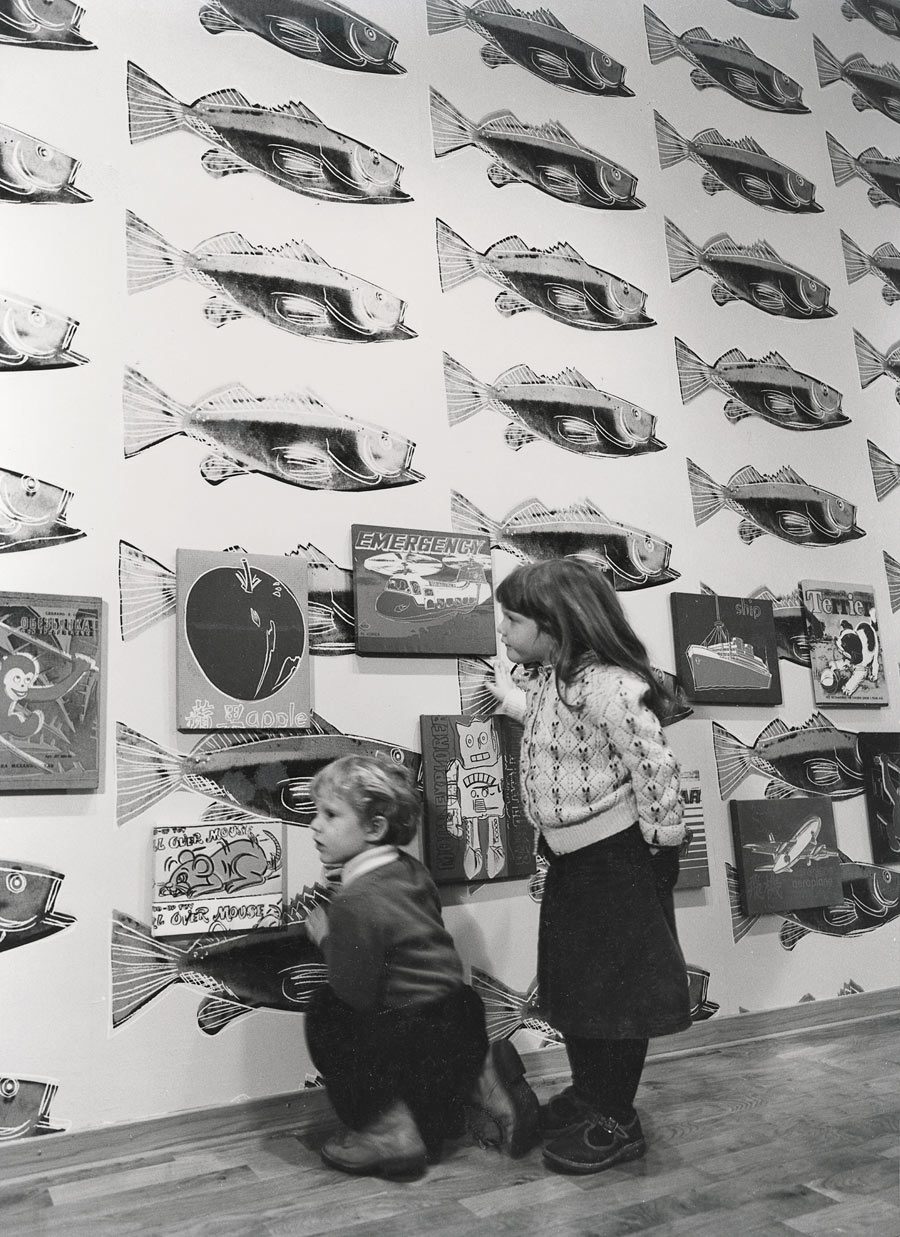
Fig. 5 Andy Warhol, Paintings for Children, 1983. View of the exhibition at Galerie Bruno Bischofberger, Zurich. © Andy Warhol Foundation for the Visual Arts
Warhol created his first wallpaper at a time when he was expressing his desire to abandon painting in favour of other artistic mediums more open to experimentation: first of all, cinema, which found its key features in monotony and repetition [15].
In this regard it is important to emphasize that, from the very early 1960s, Warhol’s oeuvre had focused decisively on the possibilities of formal and iconographic reiteration: this concerned primarily painting and sculpture and then various other media.
The framework offered by Warhol through his iteration of elements drawn from reality implied much more than the “mere numerical repetition of terms” (Dyer, 2011, p. 1) of the composition, concerning the modes of conception and construction of images as well as the equal value assigned to them. In fact, Warhol, by drawing from the contemporary imagination—everyday objects or figures from the star system—and repeating them a potentially infinite number of times, interrogated the modern iconographic sphere by presenting contemporary icons as devoid of meaning (Dyer, 2004).
The difference in scale adopted by Warhol in reproducing his subjects, marked in particular by enlargements, also set in motion a further ironic device, which served as a reinterpretation and distortion of the “familiar” sign, taken from everyday life and reduced to a pure flatness of surface, to the point of two-dimensional film-like quality, in the case of wallpaper.
Warhol introduced the latter into contexts officially dedicated to the most cutting-edge art, initially prompting some critics to question the legitimacy of the operation, which some did not take too seriously [16].
Moreover, the artist himself, in The Philosophy of Andy Warhol, a hyperbolic compendium of his thought, wrote: “I like to be the right thing in the wrong space and the wrong thing in the right space. […] usually being the right thing in the wrong space and the wrong thing in the right space is worth it, because something funny always happens” (Warhol, 1975, p. 4) [17].
The often playful sense of disorientation triggered in the audience’s perception will be a fundamental part of an experience in which the wallpaper takes on a central role. It will, in effect, become “the right thing in the wrong place”: the surface that, unfolding and covering the walls, instantly contradicts the neutrality of the modernist white cube, giving it the appearance of a living, pulsating space and, to that extent, reconnecting with gestures made thirty years earlier by Marcel Duchamp, who had presented the perceptually altered exhibition context as a structuring element of the exhibition’s content.
Fig. 6 Andy Warhol, Flowers, 1965. View of the exhibition at Galerie Ileana Sonnabend, Paris, May 1965. © Andy Warhol Foundation for the Visual Arts
The wallpapered wall, therefore, is no longer a mere container but an environmental installation that refers to “something else”, beyond the walls of the space dedicated to art, in a bouleversement that hybridizes the exhibition space and the domestic dimension, and thus closely comments, among other things, on the proliferation of images and information in the contemporary mass media flow.
As mentioned, Cow was the first wallpaper to open up to a sphere linguistically distinct from interior decoration, positioning itself as a work of art: it nevertheless assimilated the structural characteristics of the latter, subjecting them to conceptual twists and shifts and transferring them to the realm of the definition of the work of art and its exhibition possibilities.
Warhol’s breakthrough is evident in the arbitrary chromatic choice as well as in the dimensions of the pattern’s key motif: from this perspective, one might trace a possible precedent in Splotchy, a pioneering pattern created on wallpaper in 1949 by Alexander Calder [18]. This pattern, with its redundant and chromatically aggressive design (featuring a preponderance of black marks and red and green patches on a white background), was the first to manifest a provocative departure from the usual ornamental conventions of wallpaper, while remaining tied to the commercial sphere of the product.
The environmental dimension associated with the medium of wallpaper, on the other hand, had been partly foreshadowed by Aggregation: One Thousand Boats Show (1963) [19], an environment by Yayoi Kusama, an artist distinct from Warhol in poetics and modus operandi but similarly active in the United States.
The work centred on the object-based reproduction of a rowboat, stripped of any potential mythical-philosophical connotations and completely overrun by an aggregation of padded, irreverent elements with overt phallic references (Hoptman, Tatehata, Kultermann, 2000, p. 55; Kusama, 2013).
These elements were reflected and replicated exponentially on the two corner walls of the exhibition space, where Kusama had applied nine hundred and ninety-nine black-and-white silkscreen prints on paper, each depicting the boat itself. While this was not wallpaper in the strict sense, the function assigned to the dense arrangement of the sheets on the walls is nonetheless evident, where the reflection and continuous repetition of the image created an alienating, and oppressive effect, which was only partially alleviated by the brightness of the boat’s sculptural element, completely painted white.
While agreeing in part with what Laura Hoptman (2000, p. 55) who defines it as an early and visionary use of wallpaper by Kusama, it should be emphasized that the environment, viewed within the context of the artist’s parallel production, bore witness to a critical stance toward mass production and at the same time aligned with the performative practice of the artist, who had herself portrayed, naked and defenceless, against the very wall.
Finally, it should be noted that the movement of iconographic repetition had developed in Kusama as a genuine intrinsic and mental urgency (even bordering on pathology), whereas in Warhol it had maintained firm roots in the observation of the extrinsic mechanisms of image dissemination, advertising, and mass media communication in general.
Returning to an analysis of Warhol’s artistic language, it is also worth noting that his practice of iconographic repetition had, as early as 1962, led—through works such as 210 Coca-Cola Bottles [20], 100 Cans [21], or 192 One Dollar Bills (1962) [22] – to a series of formal precursors to the wallpaper, already tending toward the composition of a true pattern, with a fundamentally decorative echo.
The most significant step in the path toward wallpaper, however, was provided by the installation of the exhibition “Flowers” (1964) [23] and, the following year, by a development of the S&H Green Stamps series, begun in 1962, which in 1965 had been photographed and reproduced as posters that, on the occasion of the “Andy Warhol” solo exhibition held in Philadelphia [24], served as advertisements for the exhibition (Frei, Prinz, 2002‑2014, vol. 1, p. 116, vol. 2B, p. 209) and had been affixed to completely cover certain museum spaces, much like actual wallpaper.
Analysing the1964 exhibition, it is worth noting that it featured a cohesive layout and a unified body of images linked to a single theme, “Flowers,” and a common thread: that of variation and iconographic repetition. For example: an entire wall of the Castelli Gallery housed twenty-eight panels featuring the same floral subject with variations in colour or image orientation, generating a fascinating effect tending toward an all-over pattern and a sort of polychromatic horror vacui.
Among the immediate reactions to the exhibition, it is worth mentioning the comment by Henry Geldzahler, an influential curator at the Metropolitan Museum of Art and a friend of Warhol’s, who, in a remark reported by David Bourdon in the “Village Voice,” referred to the installation as “upper-class wallpaper” (Auther, 2011, p. 115).
Furthermore, some critics (Saunders, 2011) still endorse the view expressed by Thomas B. Hess, editor of “ARTnews,” in the aforementioned review of the Castelli exhibition published in January 1965, where he speculated with a certain sarcasm: “It is as if Warhol got hung up on the cliché that attacks «modern art» for being like «wallpaper» and decided that wallpaper was a pretty good idea”(Hess, 1965, p. 11), presenting an exhibition space spread entirely across the floor that served as an empty container, with almost metaphysical qualities, designed to be “filled with real money” (Ibid.). In the article’s conclusion, T. B. Hess could not help but observe, in this regard, an “undeniable triumph” for Warhol, from both a sociological and an economic perspective [25].
In the first instance, the reference was to the opinion of Harold Rosenberg, who in 1952 had defined the large canvas—a common element of American Abstract Expressionism—as “apocalyptic wallpaper” (Rosenberg, 1952, pp. 21‑22; Rosenberg, 1959, p. 34), vacuously decorative and lacking in authenticity.
Focusing on the analysis of Cow Wallpaper, we can note that, in the case of the exhibition at the Leo Castelli Gallery (1966), it was displayed exclusively in conjunction with the “sculptures” Silver Clouds (1966)—a sort of silver-coloured Scotchpak cushions filled with helium, left to float freely in the room adjacent to the one covered with the wallpaper. In both cases, therefore, these were unusual and unsettling media, particularly aimed at a personal interpretation of the concepts of materiality and ephemerality in the artwork but, above all, in continuity with the radical actions proposed by Marcel Duchamp in 1938 with 1200 Sacs de Charbon [26] and in 1942 with the grid of Mile of String [27]. Both can be read as gestures that ‘manipulated’ the exhibition space as an entity in its own right (O’Doherty, 2000, p. 59) and presented the context itself as content, in part overwhelming, with an anarchic gesture, the visibility of the other works of the exhibitions.
After the exhibition at Castelli ended, Cow Wallpaper was presented as a self-contained work (and thus not as a backdrop) in a series of subsequent American and European exhibitions [28], soon requiring a new print.
It was in the winter of 1968, however, that the work found its most spectacular and unusual use in an outdoor installation, as part of the exhibition “Andy Warhol”, curated by Pontus Hultén at the Moderna Museet in Stockholm—the first major exhibition of Warhol’s work organized by a European public institution [29].
The entire exhibition featured a complex installation focused, in particular, on analysing the theme of repetition and highlighting the relationship between painting and film in Warhol’s work.
The wallpaper was used outdoors to cover the west facade of the Moderna Museet, applied to Masonite panels to create a striking and wide-reaching visibility of the polychromatic surface, which stood in stark contrast to the barren landscape of early Swedish spring (Meyer-Hermann, 2007).
In the 1970s, the artist produced three more colour variations of Cow, using them as a backdrop for other series of paintings or silkscreen prints, as a means of semantic completion and reinforcement of the iconic repetition within them, introducing a display method he would continue to follow for all his subsequent wallpapers. A new wallpaper was conceived in 1974, featuring a subject even more unusual and unsettling than the “banal” animal, yet perfectly legible within the context of Warhol’s poetics and language: a portrait of the Chinese communist leader Mao Zedong, whose face was obsessively reproduced and repeated by Chinese propaganda, arousing the artist’s interest, as he considered this mechanism akin to certain characteristics of his own production and the iconographic selection he had made (Frei, Prinz, 2010, p. 165).
An early group of works on this subject dates back to 1972 and marked Warhol’s return to painting: his extensive exploration of the iconography of the red leader finds a precedent in Jim Dine’s 1967 etching Drag – Johnson and Mao [30], featuring ironic, caricature-like makeup superimposed on the faces of the two politicians, and a parallel in Mao (1972), a large painted fabric banner created by Sigmar Polke [31]. By “appropriating” the icon of Mao’s face, Warhol thus succeeded in “detoxifying one of the most terrifying political images of the era” (Danto, 2009), effectively achieving what, in relation to the mechanisms of iconographic repetition, Gombrich had defined as “ablation of meaning” of a term repeated too many times (Gombrich, 1979, pp. 247‑248) and which would become one of the main reasons for the existence of wallpaper as a linguistic tool within the realm of contemporary art.
The wallpaper for the Musée Galliera was created with the explicit intention of giving the museum spaces the cozy (yet mundane) feel of a living room (Saunders, 2010, p. 30), thereby foreshadowing the alienating potential evident in the medium’s current use.
In Mao’s case, in fact, the chosen colour scheme features muted tones (when compared to the early examples of Cow Wallpaper) and is therefore plausible for a wallpaper design: Warhol chose to render the subject in violet on a cream-colored background and, taking a further step, synthesized Mao’s face within the contours of a perfect oval, whose features are barely legible from a certain distance.
This device brought the decorative motif closer to that derived from the traditional English “print rooms,” from which the commemorative design of some sanitary wallpapers introduced around the Great Exhibition of 1851 were in turn derived: Warhol’s work seems to refer to these, not least because, since the mid-19th century, they had allowed images and episodes linked to current events to enter the domestic interiors of vast segments of the population.
From this, one can infer the suggestion, therefore, of a greater—albeit entirely ironic— alignment of Warhol, with Mao, with the most typical décor of wallpaper, compared to what had occurred with the earlier Cow.
The exhibition at the Musée Galliera presented an insistent, numerically impressive repetition of the leader’s face, with approximately 1,950 instances recorded.
As Andrea Mecacci has significantly observed—in recent years and from an aesthetic perspective—starting from the status the leader’s image had acquired in the socio-political sphere: “Warhol would translate this obsessive iconic one-dimensionality […] by once again saturating spaces through the display of a single motif and the combination of that motif in various formats” (Mecacci 2008, translated from Italian). In conclusion: “the visual suffocation of Warhol’s Mao perfectly mirrors the overexposure of an image that exists solely in the excess of its own representational status, without the possibility of any hermeneutic intervention” (Mecacci 2008, translated from Italian).
Another wallpaper, also from 1974, is Washington Monument, created for an unknown commission and only recently exhibited in a fitting wall installation at the Beacon (New York) location of the DIA Art Foundation [32].
The pattern, dedicated to the George Washington Monument (Robert Mills, Washington 1848‑1888), is extremely linear and clearly bears Warhol’s signature style.
A close iconographic precedent can be found in the lithograph Washington Monument, produced in an edition of fifty by Willem de Kooning in 1970.
The composition is in fact centred on the same formal structure and, as in Warhol’s work, hinges on the reflection of the obelisk in the large pool in front of it.
At first glance, it seems plausible to hypothesize that both artists drew inspiration from a similar—if not identical—photographic image or, alternatively, that Warhol was familiar with de Kooning’s drawing. In any case, the 1974 pattern is striking for its clarity, the use of black and white (a rarity in Warhol’s wallpaper creations), and its tendency toward abstraction, which becomes evident in the wall installation, where nearly all recognition of the wallpaper’s key subject dissolves.
The latter, however, is at the very centre of the pattern created for a retrospective at the Kunsthaus in Zurich in 1978 [33]: Self-Portrait, an image of the artist with softened features, outlined in black and white on a geometric pattern in pink (barely hinted at) and purple.
In the pattern, one does not really perceive Warhol’s features (he was fifty at the time) so much as, rather, an idealization of him, a youthful “mask” carefully reconstructed to present the best version of himself to the public.
The theme of the self-portrait, as is well known, played an important role in Warhol’s oeuvre from the early 1960s onward, unfolding across photography, painting, drawing, and silkscreen printing in parallel with the construction of an explicit artistic identity with recognizable characteristics.
After the attack he suffered in June 1968 at the hands of the feminist activist Valerie Solanas, Warhol had abandoned the theme of the self-portrait for about a decade, returning to it in 1976‑78, a period that also saw the production of a series of three small-format Self-Portraits with Skull [34]. In these works, the dominant iconological reference is, quite openly, that of the memento mori, corresponding to an obsessive and funereal presence in Warhol’s life.
In 1978, the artist created a Self-Portrait resulting from a triple silkscreen overlay on the same canvas, depicting the head in different positions [35]: in the case of the wallpaper, however, the formal composition and execution technique are greatly simplified, allowing, as already mentioned, a youthful and expressionless face to emerge.
The rapid, essential strokes that characterize the subject of the wallpaper echo the forms of the Portrait drawings created by the artist from approximately 1974 to 1986.
Regarding the 1978 wallpaper, we can note—as previously observed with Mao—how the formal synthesis fits well within the repetitive structures of the pattern: its intended use, however (the aforementioned Zurich exhibition), which involved installation within a solo exhibition of the artist’s work, contained and limited the formal innovation of the wallpaper’s subject, aimed at a multiform reiteration and superficial celebration of the artist’s own identity and persona-mask.
A final wallpaper, Fish, was created in 1983 as a backdrop for an exhibition held at the Galerie Bruno Bischofberger in Zurich [36].
The idea for the exhibition, as well as the initiative to produce the pattern, originated with the Swiss gallerist who, aware of the special connection between Warhol’s images and the audience of young children, commissioned a small group of works dedicated to them in 1982. Warhol responded by creating the Toy paintings, centred on themes dear to childhood such as toys and animals, and presented in the 1983 exhibition with an unusual layout, in which the paintings were placed at the eye level of an ideal visitor, between three and five years of age. Completing the installation, as announced, is the background consisting of Fish, a wallpaper featuring the repetition of a silver fish on a light beige background, for which there are no significant equivalents in painting or silkscreen.
This wallpaper would be the last created by the artist: after his death, the Andy Warhol Foundation for the Visual Arts (New York) would offer a limited series of reprints of the five designs created between 1966 and 1983, restricted to the staging of exhibitions or museum spaces.
It should be emphasized, as noted in the catalogue of the Andy Warhol Museum in Pittsburgh, that these wallpapers have never been—and are not intended to be—available for commercial production and distribution.
Andy Warhol’s artistic language, in fact, developed by fully embracing—not least through his use of wallpaper patterns—the banal language of ordinary things (Danto, 1992); yet through it, drawing on the compositional and thematic freedom inherent in his poetics, he laid the foundations for a new possibility of discourse, a different conception of the medium. For this reason, it is possible to observe how artists who, over the past fifty years, have adopted the form offered by the renewed wallpaper, do not repeat or cite, but certainly refer, in some way, to Warhol’s work “as the primary points of reference” (Foucault, 1969)[37].
Notes and references
[1] The exhibitions were: “Apocalyptic Wallpaper. Robert Gober, Abigail Lane, Virgil Marti, and Andy Warhol”, curated by Donna De Salvo and Annetta Massie (Columbus, 1997); the double exhibition “On the Wall: Wallpaper by Contemporary Artists” (Providence, 2003) and “On the Wall: Wallpaper and Tableau” (Philadelphia, 2003) curated by Judith Tannenbaum and Marion Boulton Stroud; “Walls are talking. Wallpaper, Art and Culture” (Manchester, 2010) curated by Gill Saunders; “Face au mur. Papiers peints contemporains” (Pully-Lausanne, 2010‑2011), curated by Marco Costantini; “Faire le mur! Quatre siècles des papiers peints au musée des Arts Décoratifs” (Paris, 2016), curated by Véronique De La Hougue.
[2] See note 6
[3] Andy Warhol, New York, Leo Castelli Gallery, April 2‑27, 1966.
[4] Within a framework that had been reconstituted in artistic practice—and specifically in the production of series and multiples—the dichotomy previously formulated by a young Clement Greenberg in Avant-Garde and Kitsch (1939) in terms of avant-garde art versus commodity culture. See Greenberg, 1939; Foster, 1996.
[5] This occurs from the moment that such a mechanism represents a free transgression of the rules that define the “law,” which is the realm of “similar form” and “equivalent content” (Deleuze, 1968, pp. 9‑12).
[6] Among the movements referred to, the most significant can be considered to be: the revolution spearheaded by William Morris and the Arts and Crafts movement, which, in the mid-19th century, sought to renew (among other things) the ornamental repertoire of wallpaper, bringing the realm of decorative production closer to that of art, while remaining open to technical and industrial innovations; the fusion of different media and objects, belonging indiscriminately to the realms of “high” or “low” production, manifested through the introduction of collage and its subsequent derivations in the fields of installation and proto-environment. At the same time, in the first half of the twentieth century, the creation by artists of patterns to be reproduced on commercial wallpaper was a non-linear process: one need only consider the austere production of graphic textures by Bauhaus students or by key figures in modern architecture such as Le Corbusier or Lloyd Wright. The working methods of the early part of the century were long influenced by the judgment of René Magritte (who had worked as a wallpaper designer for the Belgian firm Peeters-Lacroix) regarding the inappropriateness, for professional painters, of engaging in an ornamental practice considered not only “minor” but even “degrading.” Nevertheless, from 1948 through approximately 1950, several prestigious commissions were awarded by the two U.S. firms Katzenbach & Warren and Schiffer, involving figures such as Alexander Calder, Henri Matisse, Roberto Matta, and Joan Miró (Mural Scroll series, Katzenbach & Warren 1949) or Alexander Calder for Laverne (the Contempora collection, Laverne 1949). See Oliver Hapgood, 1992, pp. 187‑194; Thibaut-Pomerantz, 2009, pp. 207‑213.
[7] “Andy Warhol Retrospective”, New York, Whitney Museum of American Art, May 1‑June 20, 1971.
[8] Cow Wallpaper, 1971. A version not produced for a specific exhibition. See Feldman and Schellmann, 2003, pp. 27 and 63.
[9] Cow Wallpaper, 1976. Version created for the exhibition “Andy Warhol”, Seattle, Modern Art Pavilion ‑ Seattle Center, November 18, 1976–January 9, 1977.
[10] “Andy Warhol: Mao”, Paris, Musée Galliera, February 23–March 18, 1974.
[11] “Paintings for Children”, Zurich, Galerie Bruno Bischofberger, December 3, 1983–January 14, 1984.
[12] “Andy Warhol: Skulls 1976”, curated by Gary Garrels, New York, DIA Art Foundation, October 14, 1987–June 18, 1988.
[13] “Flowers”, New York, Leo Castelli Gallery, November–December 1964; Paris, Galerie Ileana Sonnabend, May 1965.
[14] See Foster, 1996, pp. 36‑59; Dyer, 2004, pp. 33‑47.
[15] The filmmaker Jonas Mekas (a longtime collaborator of Andy Warhol), for example, compared Warhol’s films to a “piece of wallpaper”: De Haas, 2005, p. 30.
[16] See, for example, D. Antin, “Warhol: The Silver Tenement” in “ARTnews”, 65 (4), Summer 1966, pp. 47‑49, 58‑59.
[17] “I like to be the right thing in the wrong place and the wrong thing in the right place. […] It’s usually worth being the right thing in the wrong place and the wrong thing in the right place, because something funny always happens.” T.d.A. Warhol, 1975, p. 4.
[18] See note 6.
[19] Y. Kusama, Aggregation: One Thousand Boats Show, 1963. The environment (consisting of a central boat covered in padded growths and a wall installation on the wall, of nine hundred and ninety-nine silkscreen images on paper) was presented in New York, at the Gertrude Stein Gallery, in December 1963 and is now (displayed in a partial form, limited to the sculpture alone) in the collections of the Stedelijk Museum in Amsterdam.
[20] A. Warhol, 210 Coca-Cola Bottles, 1962. Oil on canvas, 144.8 x 208.9 cm. Private collection.
[21] A. Warhol, 100 Cans, 1962. Oil on canvas, 182.88 x 132.08 cm. Buffalo, Albright-Knox Art Gallery.
[22] A. Warhol, 192 One Dollar Bills, 1962. Silkscreen on canvas, edition of six, 189 x 249 cm.
[23] See note 13.
[24] Andy Warhol, Philadelphia, ICA – Institute of Contemporary Art, October 8–November 21, 1965.
[25] Hess speaks of “empty metaphysical vessels that are continually being filled with real money, which is an undeniable triumph, sociologically”. Hess, 1965, p. 11.
[26] M. Duchamp, 1200 Sacs de Charbon, 1938. Exposition Internationale du Surréalisme, Paris, Galerie des Beaux-Arts, January 17–February 24, 1938.
[27] M. Duchamp, Mile of String, 1942. First Papers of Surrealism, New York, Whitelaw Reid Mansion, October 14–November 7, 1942. See Kachur, 2001; cf. D. Hopkins, 2014.
[28] “Holy Cow! Silver Clouds!!”, Cincinnati, Contemporary Art Center, May 1966; “Cows and Pillows”, Hamburg, Galerie Hans Neuendorf, November 10‑29, 1966; Cologne, Kühe und Schwebende Kissen, Galerie Rudolf Zwirner, January 24–February 28, 1967; “Andy Warhol”, Boston, Institute of Contemporary Art, October 1–November 6, 1966.
[29] “Andy Warhol”, curated by Pontus Hultén. Stockholm, Moderna Museet, February 10–March 17, 1968; Amsterdam, Stedelijk Museum, April 19–June 3.
[30] J. Dine, Drag – Johnson and Mao, 1967. Etching on paper, 86.9 x 122.5 cm. Tate Modern, London.
[31] See S. Polke, Mao, 1972. Paint on printed fabric, mounted on felt with wooden dowel, 373.5 x 314 cm. The Museum of Modern Art, New York.
[32] On the occasion of the exhibition, curated by Lynne Cooke, “Dia’s Andy: Through the Lens of Patronage”, Dia Beacon, 2005.
[33] “Andy Warhol”, Zurich, Kunsthaus, May–July 1978.
[34] See, for example: A. Warhol, Self-Portrait with Skull, 1978. Acrylic and silkscreen on canvas, 40.8 x 33.2 cm. National Galleries of Scotland.
[35] A. Warhol, Self-Portrait, 1978. Acrylic and silkscreen on canvas, 101.6 x 101.6 cm. The Andy Warhol Museum, Pittsburgh.
[36] Andy Warhol. “Paintings for Children”, Zurich, Galerie Bruno Bischofberger, December 3, 1983–January 14, 1984.
[37] The intention here was to paraphrase Foucault by drawing, as a suggestion, on a concept developed in What Is an Author? (Qu’est-ce qu’un auteur?, 1969) regarding authors such as Marx and Freud, considered ‘initiators of discursive practices”. Speaking of the latter, in fact, Foucault wrote: “The distinctive contribution of these authors is that they produced not only their own work, but the possibility and the rules of formation of other texts. […] Marx and Freud, as ‘initiators of discursive practices,’ not only made possible a certain number of analogies that could be adopted by future texts, but, as importantly, they also made possible a certain number of differences. They cleared a space for the introduction of elements other than their own, which, nevertheless, remain within the field of discourse they initiated” (Foucault, 1969).
Bibliography
- Alvard, J. (1963), “Bande dessinée et figuration narrative,” in *ARTnews*, vol. 66, no. 5, p. 63.Antin, D. (1966), “Warhol: The Silver Tenement” in “ARTnews,” vol. 65, no. 4, 47‑49, 58‑59.
- Auther, E. (2011), “Wallpaper, the Decorative, and Contemporary Installation Art,” in Buszek, M. E. (ed.), *Extra/Ordinary. Craft and Contemporary Art*, Duke University Press, Durham, pp. 115‑134.
- Danto, A. C. (1992), Beyond the Brillo Box: The Visual Arts in Post-Historical Perspective, University of California Press, Berkeley-Los Angeles; Italian trans. (2010), Oltre il Brillo Box. Il mondo dell’arte dopo la fine della storia, Christian Marinotti Edizioni, Milan.
- Danto, A. C. (2009), Andy Warhol, Yale University Press, New Haven; Italian trans. (2010), Andy Warhol, Giulio Einaudi Editore, Turin.
- De Haas, P. (2005), Andy Warhol, le cinéma comme “braille mental” in “Cahiers de Paris Expérimental”, no. 21.
- De Salvo, D., Massie, A., (eds.) (1997), Apocalyptic Wallpaper. Robert Gober, Abigail Lane, Virgil Marti, and Andy Warhol, exhibition catalog (Columbus, Wexner Center for the Arts – The Ohio State University, May 9–August 10, 1997), Wexner Center for the Arts/The Ohio State University, Columbus.
- Deleuze, G. (1968), *Difference and Repetition*, Presses Universitaires de France, Paris; Italian trans. (1997), *Differenza e ripetizione*, Raffaello Cortina Editore, Milan.
- Dyer, J. (2004), “The Metaphysics of the Mundane: Understanding Andy Warhol’s Serial Imagery,” in *Artibus et Historiae*, vol. 25, no. 49, pp. 33‑47.
- Dyer, J. (2011), Serial Images: The Modern Art of Iteration in “International Studies in Hermeneutics and Phenomenology”, 4, LIT Verlag, Münster.
- Fairbrother, T., (1988), “Skulls” in Garrels, G. (ed.), “The Work of Andy Warhol,” Conference Proceedings (New York, DIA Art Foundation, April 23, 1988), DIA Art Foundation, Discussions in Contemporary Culture, 3, Bay Press, Seattle, pp. 93‑114.
- Feldman, F., Schellmann, J. (eds.) (2003), Andy Warhol Prints. A Catalogue Raisonné 1962‑1987, 4th ed., revised and expanded by Feldman, F., Defendi, C., DAP Distributed Art Publishers, New York.
- Foster, H. (1996), The Return of the Real, MIT Press, Cambridge; Italian trans. (2006), Il ritorno del reale. L’avanguardia alla fine del Novecento, Postmedia Books, Milan.
- Foucault, M. (1969), “What Is an Author?” [Qu’est-ce qu’un auteur?, 1969] in Milanesi (ed.), Michel Foucault. Literary Writings, Feltrinelli, Milan 1996.
- Frei, G., Prinz, N. (eds.) (2002‑2014), The Andy Warhol Catalogue Raisonné, 5 vols., Phaidon Press, New York–London.
- Gombrich, E. H. (1979), The Sense of Order. A Study in the Psychology of Decorative Art, Phaidon, London; Italian trans. (1984), Il senso dell’ordine. Studio sulla psicologia dell’arte decorativa, Giulio Einaudi Editore, Turin.
- Greenberg, C. (1939), “Avant-garde and Kitsch” in *Partisan Review*, 6 (5),
- 34‑49; Italian trans. (2011), “Avant-garde and Kitsch,” in Di Salvatore, G., Fassi, L., eds., Clement Greenberg. The Adventure of Modernism: A Critical Anthology, Johan & Levi, Milan.
- Hess, T. B. (1965), “Reviews and Previews: Andy Warhol” in *ArtNews*, January 1965, p. 11.
- Hopkins, D. (2014), “Duchamp, Childhood, Work and Play: The Vernissage for First Papers of Surrealism, New York, 1942,” in *Tate Papers*, 22, Fall 2014. Available at: http://www.tate.org.uk/research/publications/tate-papers/duchamp-childhood-work-and-play-vernissage-first-papers-surrealism [accessed October 16, 2016].
- Hoptman, L., Tatehata, A., Kultermann, U. (2000), Yayoi Kusama, Phaidon Press, London.
- Kachur, L. (2001), Displaying the Marvellous: Marcel Duchamp, Salvador Dali and Surrealist Exhibition Installations, MIT Press, Cambridge.
- Krauss, R. (1979), “Grids” in October, vol. 9, Summer 1979, pp. 50‑64; Italian trans. (2007) edited by E. Grazioli, “Griglie” in L’originalità dell’avanguardia e altri miti modernisti, Fazi Editore, Rome.
- Kusama, Y. (2013), Infinity Net: The Autobiography of Yayoi Kusama, Tate Publishing, London.
- Mecacci, A. (2008), Introduction to Andy Warhol, Editori Laterza, Rome-Bari. Meloni, L. (2013), Art Looks at Art, Postmedia Books, Milan.
- Meyer-Hermann, E. (ed.) (2007), Andy Warhol. A Guide to 706 Items in 2 Hours 56 Minutes, exhibition catalog for Other Voices, Other Rooms (Amsterdam, Stedelijk Museum, October 12, 2007–January 13, 2008; Stockholm, Moderna Museet, February 9–May 4, 2008), NAi Publishers, Rotterdam.
- Michelson, A. (ed.) (2001), Andy Warhol in “October Files,” vol. 2, MIT Press, Cambridge.
- O’Doherty, B. (2000), Inside the White Cube. The Ideology of the Gallery Space, Expanded Edition, University of California Press, Berkeley-Los Angeles; Italian trans. (2012), Inside the White Cube. L’ideologia dello spazio espositivo, Johan & Levi, Milan.
- Oliver Hapgood, M. (1992), Wallpaper and the Artist: from Dürer to Warhol, Abbeville Publishing Group, New York.
- Rosenberg, H. (1952), “The American Action Painters” in *ArtNews*, December 1952, pp. 21‑22.
- Rosenberg, H. (1959), The Tradition of the New, Horizon Press, New York 1959.
- Saunders, G. (ed.) (2002), Wallpaper in Interior Decoration, V&A Publications, London.
- Saunders, G. (ed.) (2010), Walls are talking. Wallpaper, Art and Culture, exhibition catalog (Manchester, The Whitworth Art Gallery, University of Manchester, February 5–May 3, 2010), The Whitworth Art Gallery and KWS Publishers, Chicago-London.
- Stuckey, C.F. (1988), “Warhol in Context” in Garrels, G. (ed.), “The Work of Andy Warhol,” conference proceedings (New York, DIA Art Foundation, April 23, 1988), DIA Art Foundation, Discussions in Contemporary Culture, 3, Bay Press, Seattle, 1998, pp. 3‑33.
- Stuckey, C.F. (2003), Wallpaper as Art. A Brief History in Tannenbaum, J., Boulton Stroud, M. (ed.), On the wall. Contemporary wallpaper, exhibition catalog for On the wall: Wallpaper by contemporary Artists (Providence, Museum of Art, Rhode Island School of Design, February 7–April 20, 2003), On the wall: Wallpaper and Tableau (Philadelphia, The Fabric Workshop and Museum, May 9–September 13, 2003), Museum of Art, Rhode Island School of Design, Providence – The Fabric Workshop and Museum, Philadelphia, Meridian Printing, Rhode Island, pp. 35‑49.
- Tannenbaum, J., Boulton Stroud, M. (eds.) (2003), *On the Wall: Contemporary Wallpaper*, exhibition catalog for *On the Wall: Wallpaper by Contemporary Artists* (Providence, Museum of Art, Rhode Island School of Design, February 7–April 20, 2003); On the Wall: Wallpaper and Tableau (Philadelphia, The Fabric Workshop and Museum, May 9–September 13, 2003), Museum of Art, Rhode Island School of Design, Providence – The Fabric Workshop and Museum, Philadelphia, Meridian Printing, Rhode Island.
- Thibaut-Pomerantz, C. (2009), Wallpaper. A History of Style and Trends, Flammarion, Paris.
- Warhol, A. (1975), THE Philosophy of Andy Warhol. From A to B and back again, Harcourt Brace Jovanovich, New York-London.
About the author
Teresa Lucia Cicciarella, Ph.D. (Marsala, 1981) is an Italian art historian and lecturer, currently serving as Adjunct Lecturer of Contemporary Art History and Design at the University of Tuscia (Viterbo). After obtaining her degree in Contemporary Art History (DAMS Arte, University of Palermo), she pursued postgraduate specialization in Contemporary Art History (2011) at the University of Siena, where she first engaged with the study of wallpaper as a medium within contemporary art.
She holds a Ph.D. in Memory and Materiality of Works of Art through the Processes of Production, Historicization, Conservation, and Musealization (University of Tuscia, 2015), with a dissertation entitled From Background to Foreground: Wallpapers as Works of Art from the 1960s to the Present. She also teaches at an art high school and has collaborated with public and private institutions on educational initiatives and museum mediation projects, while concurrently working as a freelance art critic. Her research interests include twentieth- and twenty-first-century Art history, Design history, Art history education, Applied Arts, and the interconnections between Art and Fashion.
Consult our other wallpaper artists
BALDESSARI John • BOWIE David • BOYCE Sonia • CORDIER Frédéric • GENERAL IDEA • GOUGEON Diane • HADID Zaha • MONKMAN Kent • MONNET Caroline • MORELLI François • MYRE Nadia • PAREDES Cecilia • PÉTRIN Dominique • STURTEVANT Elaine • WARHOL Andy
COMMISSAIRE
CLAUDE GOSSELIN, C.M.
Directeur général et artistique
Centre international d’art contemporain de Montréal
claude.gosselin@ciac.ca